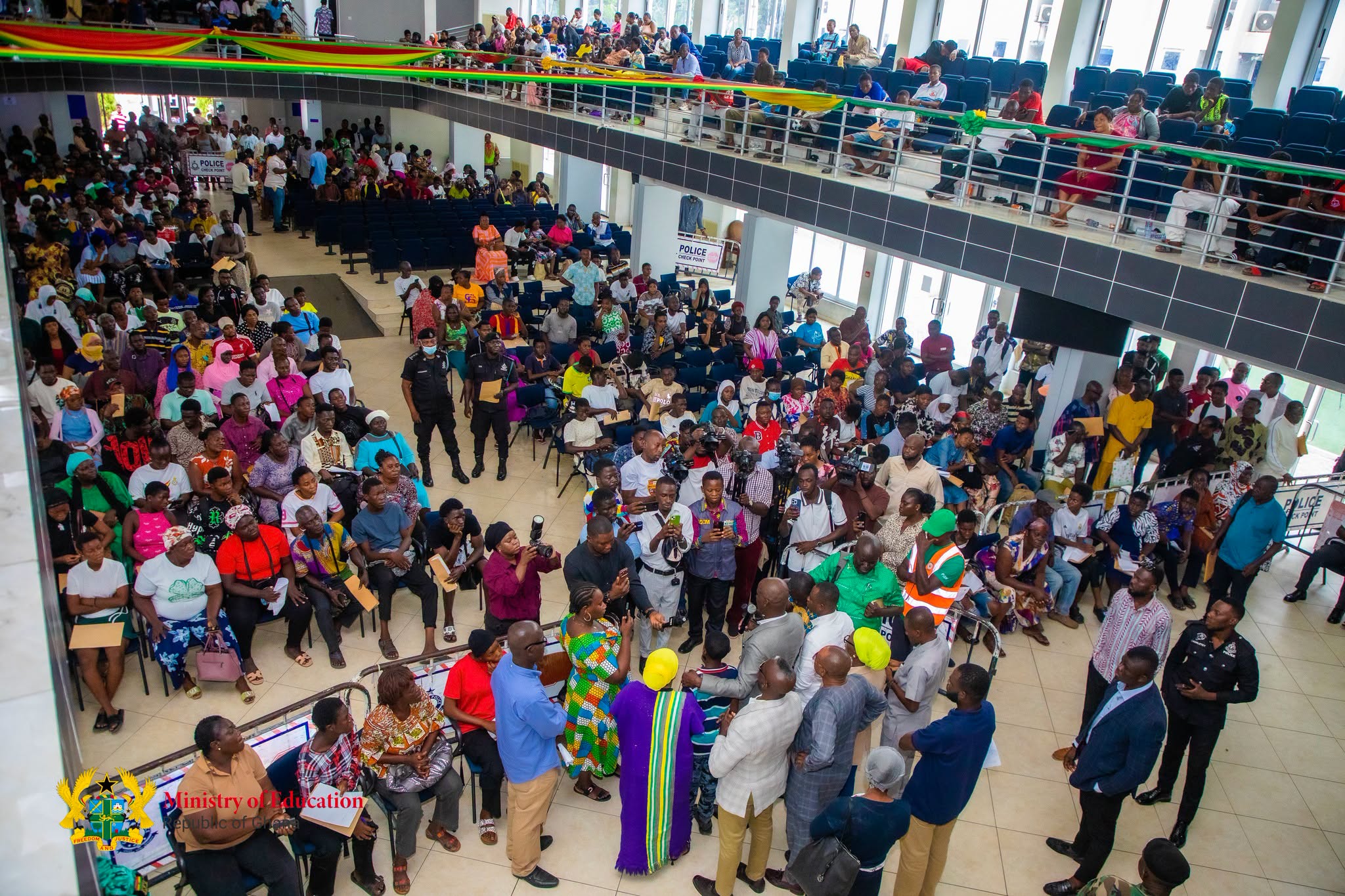

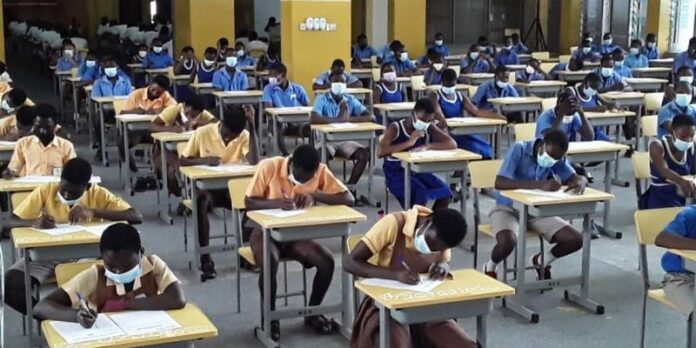
Last month, the West African Examinations Council (WAEC) released the 2026 Basic Education Certificate Examination (BECE) results, with more than 50,000 learners reportedly failing English and Mathematics.
When BECE results disappoint, the immediate question is usually: why did Junior High School (JHS) students perform so poorly?
We scrutinise the examination, compare results and analyse trends. We discuss discipline, phone use as a distraction, examination malpractice, teacher quality and several other factors.
These questions have merit. But there is a more fundamental question: What did these children know before they even entered JHS?
That is where it becomes clear that the BECE is not where Ghana’s learning problem begins. Rather, it is where years of accumulated learning gaps become much harder to ignore.
My argument is simple: if the foundation is weak, the final examination will expose it. Fix foundational learning, and you fix learning.
The warning signs appear years before BECE
BECE results are symptoms of a deeper problem: too many children are in school but are not learning.
Consider the evidence from much earlier in the education system.
Ghana’s 2024 National Standardised Test (NST) found that 50 per cent of Primary 4 learners were below the basic proficiency level in English, while 45 per cent were below basic proficiency in Mathematics.
Only 21 per cent reached a high proficiency level in English, with the figure standing at just 18 per cent for Mathematics.
The problem is visible even earlier.
Ghana’s 2022 Primary 2 NST found that only 38 per cent of learners could read at grade level, compared with 62 per cent who could not.
The last Early Grade Reading and Mathematics Assessment (EGRA/EGMA) also found that as many as 98 per cent of learners could not read at grade level.
It’s not a JHS or BECE problem
These figures should fundamentally change how we talk about BECE performance.
A child who cannot read fluently and comprehend a text is not only struggling with English. That child is also likely to struggle to access other subjects.
So when such a learner reaches JHS and encounters increasingly demanding content, it should not be surprising when performance deteriorates. The system has simply carried the deficit forward.
We tend to think about education in stages: KG, primary, JHS and SHS. Children, however, experience education as a cumulative process.
A child who misses early reading skills does not receive a clean slate at Primary 4. Likewise, a child who enters upper primary without adequate comprehension does not magically acquire it simply because the curriculum has moved on.
When I taught JHS pupils in Kalpohin some years ago, some learners in JHS 3 struggled to read simple sentences after six to eight years of schooling. Many other teachers have had similar experiences, even at the senior high school level.
The JHS curriculum has little room for such learners. Instead, the demands increase. Texts become more difficult, instructions become longer and concepts more abstract.
Teachers also have less time to return to the basics because they are expected to cover the curriculum for the grades they teach.
By JHS, the problem can appear to be an English problem, a science problem or a mathematics problem. But much of it began years earlier.
This is why the distinction between schooling and learning matters.
Ghana has made progress in getting children into school, although many are still out of school. The bigger challenge is increasingly whether the years children spend in school translate into the knowledge and skills they need.
The 2023 Ghana Partnership Compact is clear on this point. It identifies foundational learning as the country’s overarching priority reform area and defines it as the literacy, numeracy and socio-emotional skills that provide the building blocks for subsequent learning.
That is the right direction. The question, however, is: if foundational learning is the priority, what targets are we measuring ourselves against?
Are we organising the rest of the basic education system around achieving those targets?
What is our strategy for advancing foundational learning? How are we tracking progress? Where is dedicated funding coming from?
I do not see BECE results getting significantly better if we do not prioritise foundational learning. And we cannot prioritise foundational learning without a clear, coherent and system-led strategy in action, rather than simply on paper.
We keep asking schools to do more
Ghana’s Standards-Based Curriculum was not designed merely to help children pass examinations. It was intended to develop competencies, creativity, critical thinking, problem-solving, values, STEM skills and the capabilities needed for further education, work and citizenship.
The curriculum is ambitious. The issue is not that Ghana expects too much from education, but whether the system can deliver all these priorities effectively and simultaneously.
Schools are now expected to strengthen foundational literacy and numeracy while also developing subject knowledge.
The latest curriculum reforms bring the number of subjects at the basic school level to 13, including the introduction of Chinese, French and Arabic from Primary 1, among others.
Each of these expectations may have merit. But curricula are not implemented on paper. They are delivered by teachers in real classrooms, with limited instructional time, finite resources and learners with diverse needs.
In that context, success depends on prioritisation.
Global evidence suggests that systems achieving strong learning outcomes typically ensure that learners master a few foundational skills first before progressively building on them.
The goal should not be to cover everything at once. It should be to ensure that children firmly master the knowledge and skills that make further learning possible.
NaCCA itself has recognised this challenge. The National Curriculum Framework cautioned that the curriculum remains loaded, with “curriculum overload/overlap caused by an imbalance of depth and breadth.”
It also noted that there were too many subjects in the school curriculum, including seven at KG and eight in lower primary, making it difficult to focus on the most important learning outcomes.
Findings from the Ghana National Education Campaign Coalition’s (GNECC) Breadth of Learning (BOLO) research under NEST point to a similar concern, revealing significant gaps between the intended curriculum and what is actually implemented.
In practice, ambitious expectations often collide with the realities of teaching and learning, meaning some content is not taught when the curriculum is overloaded.
A curriculum can be educationally ambitious and still be operationally unrealistic.
It is therefore worrying that we are adding to an already demanding curriculum through recent reforms. We should be cautious about responding to weak learning outcomes by continually adding new competencies, themes or initiatives.
Not every educational challenge requires another curriculum demand.
Sometimes meaningful reform means making deliberate choices about what to prioritise, what to sequence and what to leave for later.
We must simplify to succeed
Recently, an educationist I respect expressed concern that the kindergarten curriculum has no content on technology, given its growing importance in the age of artificial intelligence.
Given the opportunity, many would expand the curriculum without a second thought.
When I had the privilege of joining a technical working group on a recent curriculum review project, one of the fiercest debates was whether children needed more content or deeper mastery of less.
The intention is genuine. We want our children to learn everything important to enable them to compete globally.
But the argument is not about what is important and what is not.
The real question is: What must children master first?
The answer is neither to abandon critical thinking nor to return to rote learning. The answer is sequencing.
Children first need a strong foundation. Those foundations can then be deliberately used to develop more complex competencies.
Critical thinking does not exist in a vacuum. Children need knowledge to think critically about. Problem-solving requires something to solve and the conceptual tools to solve it.
Creativity becomes more powerful when learners have knowledge, vocabulary, confidence and the ability to communicate their ideas.
Digital skills cannot compensate for an inability to understand what is being read on a screen.
This is where “simplify to succeed” becomes important.
Simplification does not mean lowering standards. It means identifying the standards that are non-negotiable, ensuring that learners master them, and then progressively building from that foundation.
Ghana already has evidence that simplifying can improve results
There is reason for optimism. Ghana does not necessarily need to import entirely new solutions.
The country’s experience with Differentiated Learning Plus (DL+) and Complementary Basic Education provides an important lesson.
DL+ uses assessment to identify learners’ performance levels, groups them according to their learning needs, provides targeted instruction and tracks their progress.
An independent evaluation covered 320 primary schools over three years, while more recent UNICEF evidence reports substantial gains among participating schools.
According to the 2024 NST, the proportion of Primary 4 learners in DL+ schools who were below basic proficiency in reading fell from about half to roughly one-third after one year.
In mathematics, the proportion below proficiency fell from 67 per cent to 33 per cent.
While this example does not suggest that one programme can solve Ghana’s foundational learning challenges, it demonstrates that narrowing the instructional focus and giving teachers practical tools to respond to learners at their level can produce meaningful progress.
Programme components such as targeted instruction, structured pedagogy, regular assessment and targeted teacher training with ongoing coaching show promise, although implementation quality remains critical.
What should change?
The National Education Forum report presented to President Mahama in June 2025 contains 212 recommendations.
With limited time and resources, it is encouraging that the Ministry of Education is choosing to invest in foundational learning.
The next step is to recognise that if we expect different results, we need to do things differently.
While there are several areas we could address, I would prioritise three:
- Establish a small set of non-negotiable foundational learning outcomes.
Ghana should establish specific foundational learning outcomes to be achieved by particular grades and years as part of its foundational learning strategy.
Without clear targets around which the education system can rally, together with the leadership and accountability needed to achieve them, we risk making foundational learning a priority only in speeches.
Aiming for a global benchmark is too vague. We need to set our own goals and work deliberately towards achieving them.
- Make assessment more useful for instruction.
A national assessment should not merely tell us that children are behind. It should help the system understand where they are behind and give teachers practical ways to respond.
This calls for repositioning the National Standardised Test (NST) as a diagnostic tool that tells teachers where the learning gaps are and what needs to be done.
In my conversations with teachers and district officials, I struggle to find examples of how the NST directly changes classroom practice.
- Strengthen teacher professional development around foundational learning.
Teacher professional development should focus more heavily on the pedagogy of foundational literacy and numeracy, including assessment, explicit instruction, differentiation and remediation.
Targeted remediation should become normal practice and be built into the curriculum and timetable.
A Primary 5 learner reading at a Primary 2 level needs support at their actual learning level, not simply more Primary 5 content delivered more slowly.
Foundational learning is everyone’s responsibility
Foundational learning must remain a system-wide responsibility.
By the time a child reaches JHS, it is too late to pretend that foundational learning is someone else’s problem.
JHS teachers should not have to choose between teaching the JHS curriculum and repairing years of unresolved learning gaps.
Our concern should not simply be why a 15-year-old failed to answer a BECE question.
It should be why, ten years earlier, we allowed that child to progress without mastering the skills needed to understand the question.
The author, Senyo Tettegah, is an educationist, Host of the Let’s Talk Education Africa Podcast and Country Manager for the Luminos Fund.
SOURCE – www.citinewsroom.com