
CUTS International Accra, a public policy think tank focused on consumer protection and competition advocacy,
has commended the Bank of Ghana for swiftly intervening to suspend the proposed 0.75 percent wallet-to-bank
transfer fee announced by Mobile Money Fintech Limited, operators of MTN Mobile Money (MoMo).
The charge, which was expected to take effect on June 1, 2026, has been temporarily put on hold pending further
consultations.
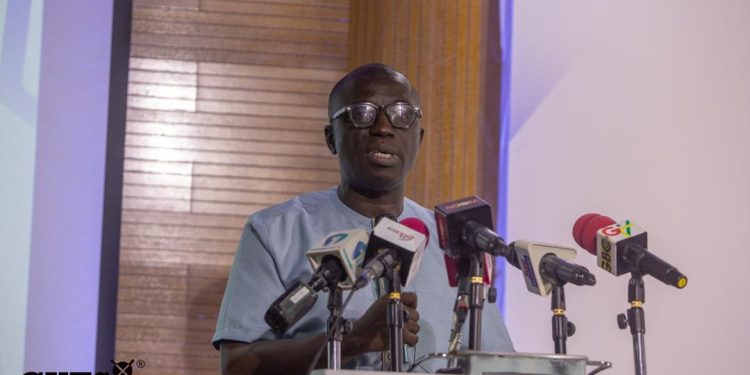
Commenting on the decision, Appiah Kusi Adomako praised the central bank for protecting consumers through
timely regulatory action. He said the intervention demonstrated the importance of ensuring that changes within the
mobile money sector are implemented transparently, fairly, and in line with existing regulations.
While acknowledging that businesses have the right to adjust pricing structures to maintain sustainability, CUTS
clarified that it does not oppose MMFL’s intention to review its charges. However, the organisation stressed that
any fee adjustments must comply with regulatory standards and adequately consider consumer interests.
The think tank noted that MMFL controls about 75 percent of Ghana’s mobile money market, making it the
dominant player in the industry. According to CUTS, dominance itself is not illegal, but abusing such market power
is unacceptable under competition principles.
Mr Adomako argued that giving consumers less than a week’s notice before introducing a major charge amounted
to unfair conduct and deprived users of sufficient time to assess the impact of the fee or consider switching to
competing services such as Telecel Cash or AT Cash.
He explained that the principle of fair notice is a key aspect of consumer protection and ethical business practice,
adding that service providers must allow customers reasonable time to make informed decisions whenever major
changes are introduced.
CUTS further highlighted the critical role mobile money plays in advancing financial inclusion in Ghana.
The organisation noted that mobile money services have made financial transactions easier for millions of Ghanaians
by reducing queues at banks, lowering transaction costs, and expanding access to financial services for people
without traditional bank accounts.
The statement concluded by emphasising that mobile money has become an essential part of everyday life and
Ghana’s financial system. It therefore urged MMFL to engage openly with regulators, consumer groups, and the
public during the consultation period to achieve a fair and sustainable outcome for all stakeholders.